
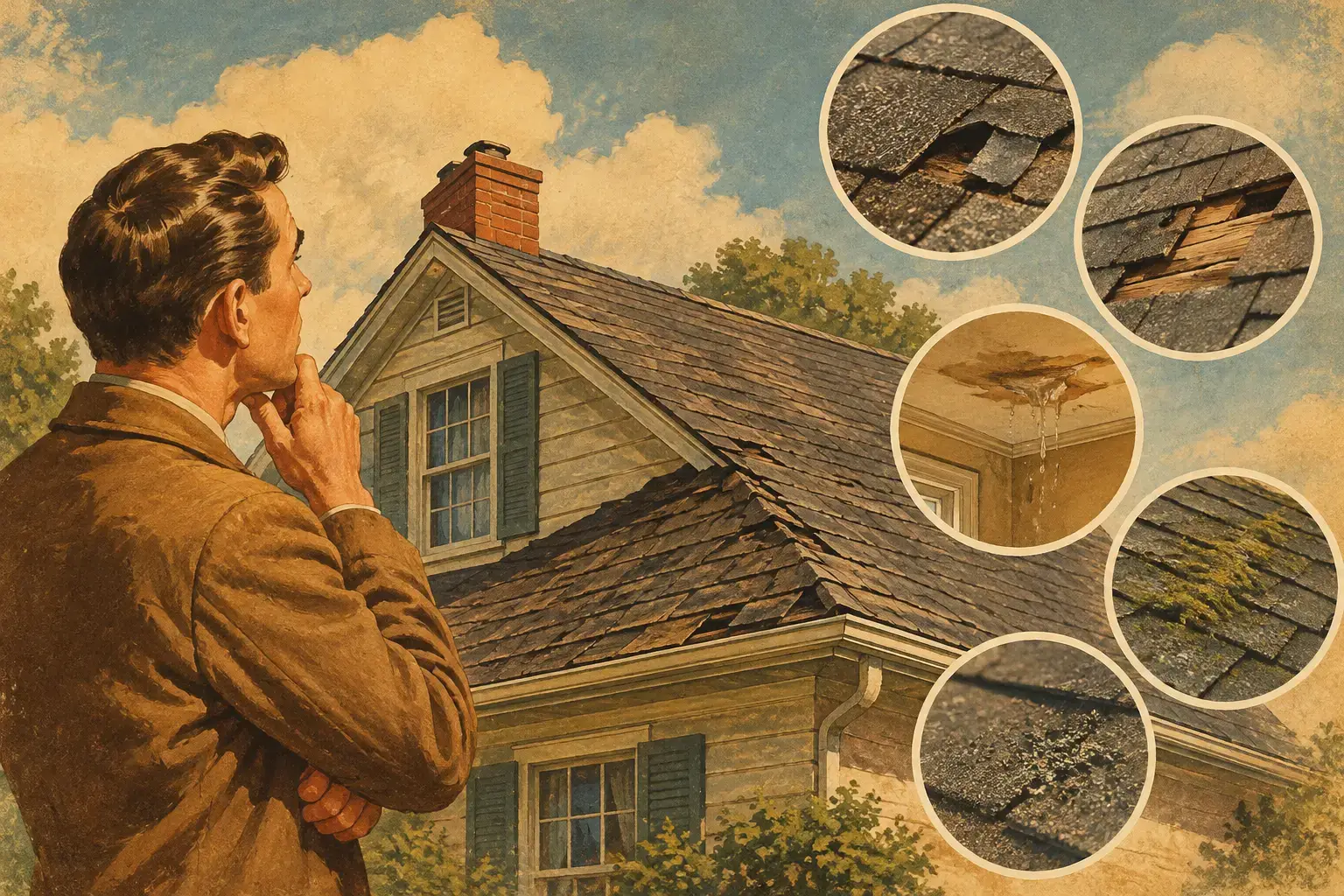
A roof rarely fails all at once. It usually gives homeowners warnings first: a stain that grows after heavy rain, shingles collecting in the gutter, or a section that suddenly looks worn compared with the rest. Recognizing the signs you need roof replacement can help you plan the work before a minor roofing concern turns into damaged insulation, framing, siding, or interior finishes.
Some problems can be solved with a focused repair. Others point to a roof system that has reached the end of its dependable service life. The difference matters, especially in the Pacific Northwest, where steady rain, wind, moss, and seasonal temperature changes can expose weak spots quickly.
10 Signs You Need Roof Replacement
1. Your roof is near or past its expected lifespan
Age does not automatically mean you need a new roof, but it is a useful starting point. Many asphalt shingle roofs last roughly 20 to 30 years, depending on shingle quality, installation, ventilation, maintenance, and local weather. Other materials have different life spans, so it helps to know what is on your home and when it was installed.
If your roof is nearing its expected age and several smaller issues are appearing, replacement often makes more financial sense than repeatedly repairing an aging surface. A professional inspection can clarify whether the roof still has useful life or whether it is becoming a recurring expense.
2. Shingles are curling, cracking, or losing their edges
Shingles should lie relatively flat and form a continuous protective layer. Curled corners, cracked surfaces, lifted edges, and cupping can mean the shingles have become brittle or are no longer sealing properly against wind and rain.
A few damaged shingles in one isolated area may be repairable. Widespread curling or cracking, however, usually signals material deterioration across the roof. Replacing a handful of shingles may improve the appearance temporarily without addressing the larger issue.
3. You see missing shingles after wind or storms
Missing shingles create direct openings in the roof’s first line of defense. The exposed area may allow water to reach the underlayment and roof decking, even if a leak is not visible inside yet.
One or two missing shingles on a newer roof can often be replaced. If shingles continue blowing off, the adhesive seals may be failing, the original installation may have weaknesses, or the roof may be too worn to hold repairs reliably. Matching older shingle colors can also be difficult, which is worth considering when appearance and curb appeal matter.
4. Granules are collecting in gutters or at downspouts
Asphalt shingles are coated with mineral granules that help shield them from sunlight and weather. Some granule loss is normal, especially after a new roof is installed. But large amounts of dark, sand-like material in gutters can be a warning that shingles are wearing down.
Look for bare spots, uneven coloring, or a noticeably rough, thin appearance on the roof. Granule loss alone does not always require immediate replacement, but it should prompt an inspection, particularly on an older roof. Clean gutters also make this issue easier to spot and help water move away from the home as intended.
5. Water stains appear on ceilings or walls
A brown ceiling stain, peeling paint, or damp patch near an exterior wall deserves attention right away. Water can travel along roof framing before it becomes visible indoors, so the stain may not sit directly below the actual leak.
The source could be damaged shingles, failed flashing around a chimney or vent, worn seals near skylights, or a problem with the roof itself. A targeted repair may be enough when the roof is otherwise in good condition. If leaks occur in multiple places or return after repair, replacement may be the more dependable solution.
6. Your attic feels damp, musty, or unusually hot
The attic can reveal roof problems before the living areas do. During a safe visual check, watch for damp insulation, mildew odor, dark staining on wood, dripping after rain, or daylight visible through the roof deck.
Ventilation is part of the equation. A poorly ventilated attic can trap heat and moisture, shortening shingle life and contributing to condensation. When replacement is needed, it is a smart time to address ventilation and any underlying moisture concerns rather than installing a new roof over conditions that could damage it prematurely.
7. The roof deck is sagging or looks uneven
A roofline should look straight and consistent from the ground. A dip, sag, or wavy section may point to weakened decking, trapped moisture, or structural concerns below the shingles. This is not a cosmetic issue to put off.
Avoid walking on a roof that appears soft or uneven. Have a qualified contractor assess the condition promptly. Depending on the cause, the project may involve replacing damaged roof decking along with the roofing materials so the home is properly shielded from the elements.
8. Moss, algae, or vegetation keeps returning
Moss is common on shaded roofs in wet climates, but it should not be ignored. It can hold moisture against shingles, lift their edges, and interfere with drainage. Algae may be mostly an appearance issue at first, while moss and growing vegetation are more likely to cause physical damage over time.
Careful cleaning and ongoing maintenance can help when shingles remain sound. Avoid aggressive pressure washing or harsh methods that remove granules and shorten roof life. If moss has spread widely and the shingles beneath it are already brittle or deteriorated, replacement may be more practical than repeated cleaning and patching.
9. Flashing around roof openings is deteriorating
Flashing is the material that seals vulnerable transitions around chimneys, vents, skylights, walls, and valleys. Because these areas handle concentrated water flow, failed flashing is a common source of leaks.
Sometimes flashing can be repaired or replaced without replacing the whole roof. But on an older roof with worn shingles and multiple weak transition points, repairing one area at a time can become a cycle. A full replacement allows the roofing system, flashing, underlayment, and drainage details to work together.
10. Repairs are becoming frequent or costly
The clearest decision point is often the pattern of repair needs. If you have fixed leaks, replaced shingles, addressed flashing, and cleaned moss repeatedly over a few years, ask whether those costs are extending the roof’s life in a meaningful way.
Replacement has a higher upfront cost, but it can reduce the uncertainty of repeated service calls and protect the rest of the home from water damage. It may also improve curb appeal, support resale plans, and give you a chance to choose materials that fit your home’s style and maintenance preferences.
When a Repair Is Still the Right Choice
Not every roof concern calls for replacement. A repair is often appropriate when the roof is relatively new, damage is confined to one small area, and the surrounding shingles remain in good condition. A storm-damaged section, a loose flashing detail, or a minor leak caught early can often be corrected without replacing the entire roof.
The key is getting an honest assessment of the complete roof system, not just the visible symptom. A patch should solve the cause of the problem, not simply cover it for another season.
What to Do Before the Next Heavy Rain
Start with a ground-level look at the roofline, gutters, and visible shingles. Check the attic after rainfall if it is safe to do so, and take photos of stains, missing shingles, or debris for comparison over time. Do not climb onto a steep, wet, or damaged roof.
If you are seeing several of these warning signs, schedule a professional evaluation before water has a chance to move deeper into your home. Grahams General Contracting can help homeowners from Vancouver to Yakima understand whether a focused repair or full replacement will provide the best protection. A clear answer now can protect the home you have worked hard to maintain.